Building Information Modeling (BIM) has transformed how we design, construct, and manage buildings. As we move deeper into 2026, the future of BIM is becoming even more promising, with cutting-edge BIM innovations 2026 set to redefine the architecture, engineering, and construction (AEC) industry. In this blog, I’ll explore the latest BIM technology trends that are shaping the digital transformation in AEC and how professionals can prepare for these advancements.
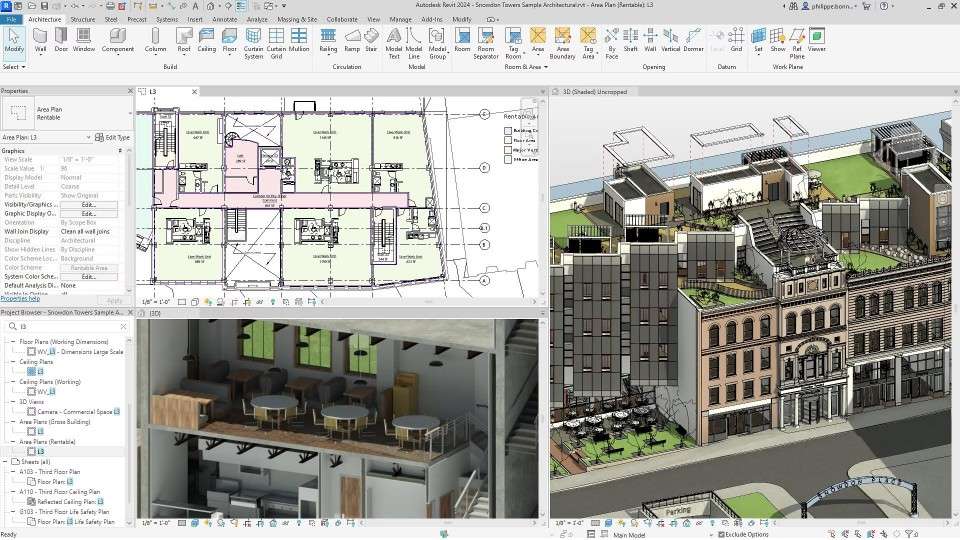
Image Credit: arkance.com
What is Driving BIM Innovations in 2025?
Technology is evolving rapidly, and BIM is at the forefront of this revolution. Several factors are driving its growth, including:
- Increased demand for sustainable construction – BIM helps in reducing waste and optimizing resources.
- Rise of AI and automation – AI-powered design tools and generative BIM models are changing workflows.
- Cloud-based collaboration – Remote work and global projects demand seamless real-time collaboration.
- Integration with IoT and digital twins – Smart buildings rely on real-time data and connected systems.
Let’s take a closer look at the top BIM trends and innovations that will dominate 2025.
Top BIM Technology Trends for 2026
1. Artificial Intelligence (AI) and Machine Learning in BIM
AI is enhancing BIM capabilities by making design processes smarter and more automated. AI-driven BIM can predict project risks, optimize designs, and improve decision-making. Here’s how AI is influencing BIM:
- Automated clash detection – AI algorithms quickly identify clashes in 3D models, saving time and reducing errors.
- Generative design – AI-powered tools like Autodesk’s Refinery suggest optimized layouts based on project constraints.
- Predictive maintenance – AI analyzes historical data to forecast maintenance needs, reducing long-term costs.
2. Digital Twins for Smart Buildings
The future of BIM is closely tied to digital twin technology, where a real-time virtual replica of a building is created. These digital models allow:
- Real-time monitoring of building performance through IoT integration.
- Simulating different environmental conditions to optimize sustainability.
- Predictive analysis for maintenance and renovations, improving building longevity.
3. Cloud-Based Collaboration and BIM-as-a-Service
With global teams working remotely, cloud-based BIM has become essential. Cloud computing enables:
- Real-time collaboration among architects, engineers, and contractors.
- Easy access to models from any device without heavy software installations.
- BIM-as-a-Service (BaaS) – Companies are now offering cloud-hosted BIM solutions for project scalability.
4. Extended Reality (XR) in BIM: AR & VR for Immersive Experiences
Augmented Reality (AR) and Virtual Reality (VR) are changing how architects and clients interact with building designs. Some key applications include:
- Virtual walkthroughs – Stakeholders can experience designs before construction begins.
- On-site AR overlays – Workers can use AR headsets to visualize BIM models on actual construction sites.
- Training simulations – New employees can train using VR models without risks.
5. Parametric and Generative Design in BIM
Parametric and generative design tools are automating complex architectural workflows. With BIM innovations 2026, designers can:
- Automate repetitive tasks like floor plan layouts.
- Generate multiple design options based on constraints like budget and sustainability.
- Optimize structures for wind load, sun exposure, and energy efficiency.
6. Blockchain in BIM: Securing Data and Contracts
Blockchain in BIM remains a promising but slowly adopted concept. While smart contracts and immutable project records are theoretically strong use cases, ensuring that every change in a BIM model is permanently recorded and that payments are automated based on verified project milestones, widespread adoption in the AEC industry has been limited by integration complexity and the absence of clear industry standards.
In 2026, it remains one to watch rather than one to implement immediately. Most firms are focused on establishing solid ISO 19650-compliant workflows and cloud-based CDE management before exploring blockchain as an additional layer. The potential is real, but the practical path to adoption is still being worked out across the industry.
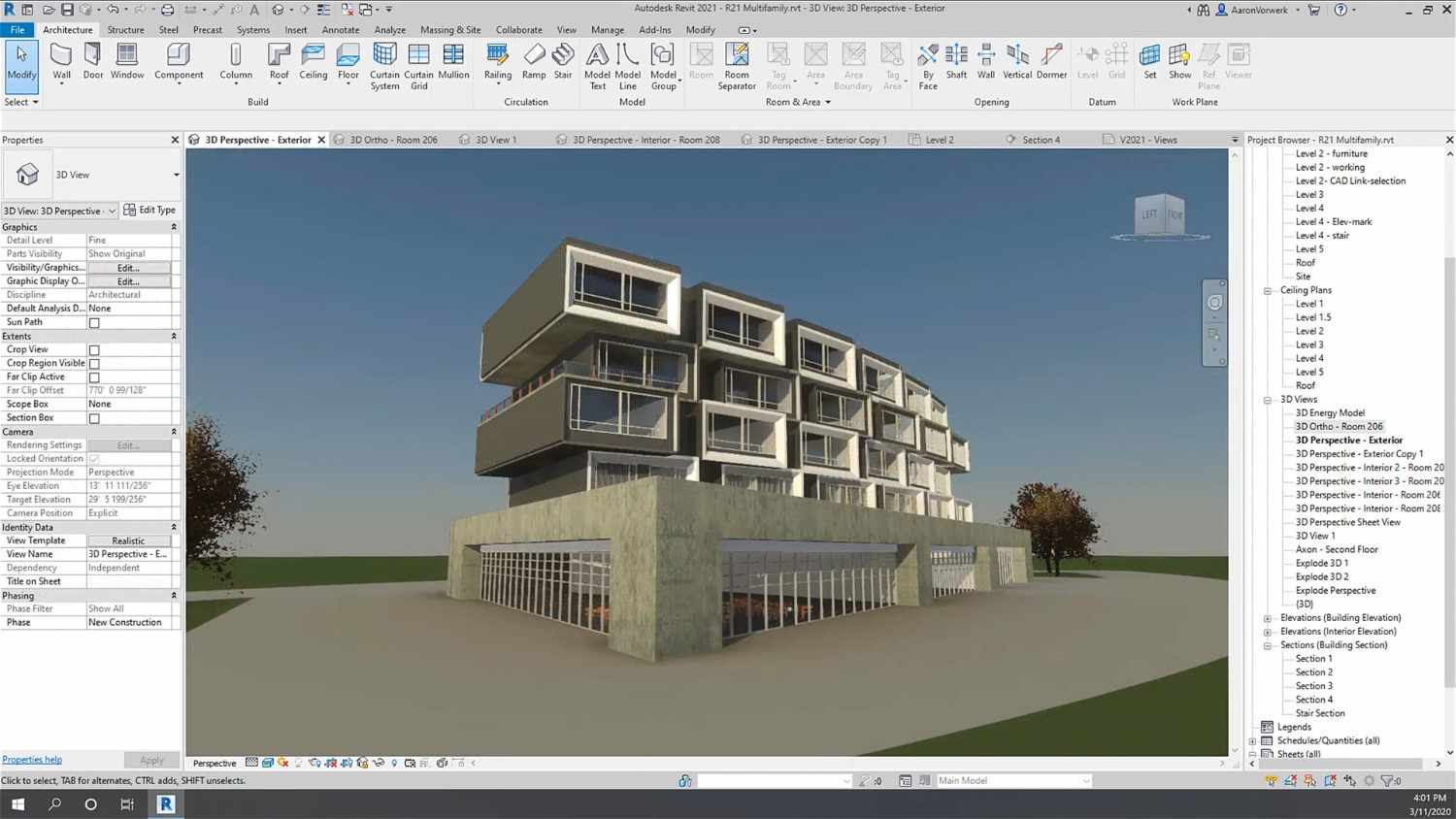
Image Credit: autodesk.com
7. BIM and 3D Printing: The Future of Prefabrication
3D printing is becoming an integral part of digital transformation in AEC. With BIM integration, firms can:
- Use 3D printing for rapid prototyping of construction elements.
- Automate prefabrication workflows to reduce material waste.
- Create cost-effective, sustainable buildings using eco-friendly materials.
The Impact of BIM Innovations on AEC Professionals
As BIM technology advances, professionals must adapt to new workflows and tools. Here’s how different roles will be affected:
- Architects – Need to upskill in generative design and AI-driven tools.
- Engineers – Must integrate digital twins and IoT for smarter infrastructure.
- Project Managers – Should leverage cloud-based BIM for real-time tracking and data-driven decision-making.
- Contractors – Must adopt AR/VR for enhanced site visualization and risk management.
The Future of BIM in Construction: What's Changing on Site in 2026
For a long time, BIM was seen primarily as a design-phase tool — something that architects and engineers used to plan and coordinate before construction began. In 2026, that perception has shifted fundamentally. BIM is now actively being used on construction sites through mobile interfaces and AR-enabled devices, allowing site teams to overlay digital models onto physical structures in real time, verify installation accuracy, and flag discrepancies before they become expensive problems.
Digital twin handover is also becoming a contractual requirement rather than an optional deliverable on large infrastructure projects. Clients — particularly government bodies and institutional asset owners — are increasingly requiring that a verified digital twin of the built asset be delivered at project completion, containing as-built geometry, installed product data, and maintenance information that can be used throughout the building's operational life.
In India, this shift is being accelerated by government policy. Infrastructure projects above certain value thresholds are beginning to require BIM workflows as part of their delivery requirements, driven by mandates from bodies like the Ministry of Housing and Urban Affairs and the Central Public Works Department. This is pushing contractors and consultants who have historically worked in 2D to rapidly upskill in BIM coordination and delivery.
ISO 19650 compliance is also evolving in 2026. AI tools are now being developed and deployed to help project teams automatically check whether their models and information deliverables comply with ISO 19650 requirements during the modelling process — not after it. This kind of real-time compliance checking significantly reduces the time spent on quality audits and reduces the risk of non-compliant deliverables reaching the client.
On the most technologically advanced large-scale sites globally, semi-autonomous construction equipment guided by BIM data is also being piloted — with machines able to read model geometry and execute tasks like grading, piling, and placement with reduced manual intervention. While this is still emerging, it signals the direction that construction technology is heading.
Conclusion: Embracing the Future of BIM
In 2026, BIM is no longer just about modelling buildings — it is about connecting every phase of a project with live data, automation, and intelligent decision-making. The professionals who thrive will be those who stop treating BIM as a drawing tool and start treating it as a project intelligence platform. The shift has already begun — the question is how quickly your practice catches up.
Ready to take your BIM skills to the next level? Explore our advanced BIM certification course to stay ahead of industry trends and become a future-ready professional!
Visit our website Kaarwan for more!
FAQs
What is the future of BIM in construction?
The future of BIM involves AI-driven automation, digital twins, cloud collaboration, and blockchain for enhanced project efficiency and transparency.
How will AI impact BIM in 2025?
In 2026, AI will improve clash detection, automate design processes, and enable predictive maintenance, making BIM more intelligent and data-driven.
What are the benefits of digital twins in BIM?
Digital twins allow real-time monitoring, predictive analysis, and improved building performance by integrating IoT and BIM data.
Why is cloud-based BIM important?
Cloud-based BIM enables real-time collaboration, remote access, and scalability, making project management more efficient and streamlined.
How can architects prepare for future BIM trends?
Architects should learn AI-powered design tools, adopt parametric modeling, and embrace XR technologies like AR and VR for better client engagement.
Image Credit: autodesk.co